


The Complete Guide to Hot Water for Van Life
Every van build eventually runs into the same question: how do you get hot water in a rig that doesn't have room for a water heater the size of the one under your kitchen sink at home? It's one of those problems that feels simple until you actually start shopping — suddenly you're comparing propane, electric, engine coolant, diesel heaters, tank sizes, voltage, and half a dozen brands you've never heard of.
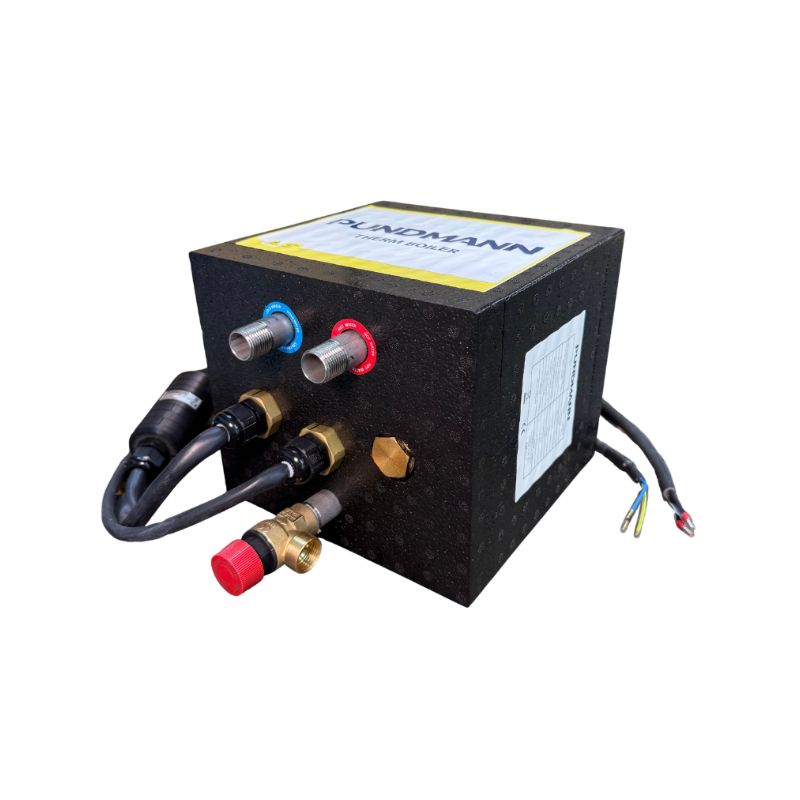
Pundmann Therm 3L: one of the compact electric boilers we reference throughout this guide.
This guide is meant to be the thing you bookmark and come back to, not a sales pitch. We'll walk through how the major water heater types actually work, how to figure out how much hot water you really need (probably less than you think), what installation looks like depending on your van, how the main brands stack up, and what tends to go wrong down the road.
Watch: PUNDMANN Campervan Water Heater Presentation (official Pundmann YouTube channel)
Why Physical Size Matters More Than Gallons
A lot of first-time builders shop by tank capacity (6 liters, 10 liters, etc.) without thinking about the physical footprint. In a van, cabinet space is the real currency. A tall cylindrical tank can eat up more usable storage than a compact rectangular unit that holds a similar amount of water. If you only remember one thing from this guide, let it be this: measure your space before you fall in love with a spec sheet.
The Four Ways Vans Get Hot Water
Broadly, you're choosing between electric storage boilers (heat water with a 12V or 110V element), propane tankless units (heat water on demand, mounted outside), engine-coolant systems (use waste heat from driving), and hydronic/diesel-combo systems (share heat with your cabin heater). Each has a different tradeoff between power draw, install complexity, and how off-grid you can really be.
How Much Water You Actually Need
Most solo vanlifers use somewhere between 2 and 6 gallons a day depending on whether they shower in the van or at a gym or truck stop. A compact 3–6 liter electric boiler paired with a low-flow shower head covers most daily-driver use cases — bigger isn't automatically better, it's just heavier and takes up more room.

Installation Reality
Where your water heater goes — and how hard it is to install — depends a lot on your specific van. Sprinter, Transit, and Promaster all have slightly different mechanical layouts, especially if you're tying into engine coolant or an existing diesel heater.
Brand Landscape
Pundmann, Isotemp, and Duoetto/Sandy Vans dominate the compact water heater conversation for vans right now, plus propane options from Camplux and Eccotemp for a different use case entirely. None of them is universally "best" — it depends on whether you value low power draw, engine-heat integration, or dead-simple plug-and-play.
Keeping It Running
Like anything else in a van, water heaters see more vibration, temperature swings, and irregular use than their residential cousins. A little basic maintenance knowledge goes a long way toward not dealing with lukewarm showers three states from home.
See the water heater lineup.
Keep Reading
- Choosing the Right Water Heater: Type, Size & Power Source
- Installing a Water Heater in Your Van (Sprinter, Transit, Promaster)
- Water Heater Brand Comparisons for Van Builders
- Power, Batteries & Off-Grid Water Heating
- Keeping Your Van Water Heater Running for Years
Watch, Read & Learn More
Official Pundmann resources:
More from around the vanlife community:


